
Niger Bird Seed vs Thistle Seed: Are They Different?
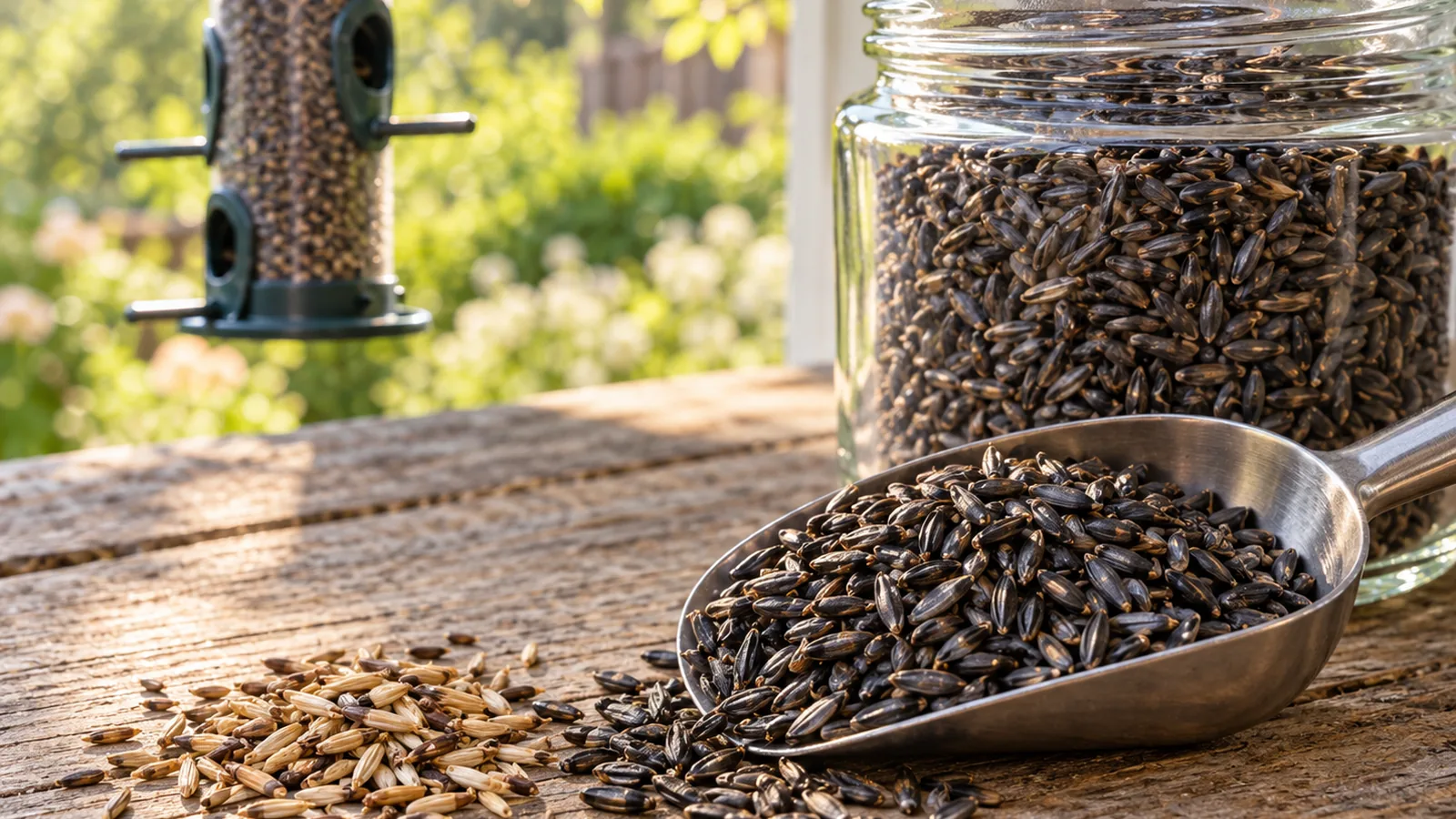
When you compare niger bird seed vs thistle seed on a store shelf, you’re usually looking at the same product. Niger, also spelled nyjer, and thistle typically name one seed from the African daisy Guizotia abyssinica, not a true thistle. Its high oil content makes it an energy source for backyard birds, and Kaytee’s nyjer guarantees a 35.0% minimum crude fat.
The name matters less than the ingredient line, so check the bag before you assume. The mistake to avoid is buying a large bag and storing it unsealed in a hot garage, where one guide estimates it lasts 6 to 8 weeks instead of about six months when sealed and kept cool.
Key Takeaways
- African daisy, not a true thistle: Nyjer comes from Guizotia abyssinica, not from a Cirsium thistle.
- 35.0% minimum crude fat: Kaytee’s guaranteed analysis lists this minimum for its nyjer seed.
- $1.39 per pound: The 50-pound in-store bag cost this much, the lowest per-pound price in the listings.
- A few weeks: Buy only what you’ll use in a few weeks, because the thin shell spoils easily in a feeder.
Quick Verdict: Same Seed, Different Names
When you compare niger bird seed vs thistle seed, you’re almost always looking at the same product under two names. Bird-food labels commonly use “thistle” for nyjer, which is also spelled niger, even though the seed doesn’t come from a true thistle. The word “thistle” on a bag names the seed, not a different ingredient.
Nyjer comes from Guizotia abyssinica*, an African daisy, not from a *Cirsium thistle. Product listings and order forms often combine the two terms and call the seed “Nyjer (Thistle)”. That label describes one seed, so you don’t need to choose between them.
Nyjer is easy to recognize and easy to describe:
- Appearance: small, thin, and black or brown
- Energy: high oil content, which makes it a rich energy source for backyard birds
- Visitors: American goldfinches, dark-eyed juncos, pine siskins, and mourning doves
Small-billed birds with sharp bills that can cling to feeders are its main consumers. That’s why it suits small-port finch feeders, the setup the seed’s maker recommends.
Shop by the Nyjer name. The Wild Bird Feeding Institute recommends using the term Nyjer, and one product listing confirms its bag holds only Nyjer seed, with no other seeds mixed in. Check the ingredient line as well.
One brand lists “Nyjer Seed (Bot. Guizotia abyssinica)”, which tells you exactly what’s in the bag.
Niger, Nyjer, and Thistle Compared
Nyjer, niger, and thistle on a birdseed bag almost always name the same seed.
| Label name | Botanical identity | Seed appearance | Named bird consumers |
|---|---|---|---|
| Nyjer | Guizotia abyssinica, an African daisy | Small, thin, black or brown | American goldfinch, dark-eyed junco, pine siskin, mourning dove |
| Niger | Same seed as nyjer | Same as nyjer | Same as nyjer |
| Thistle (label term) | Not a true Cirsium thistle; the seed is nyjer | Same as nyjer | Same as nyjer |
The oil content explains the appeal. Kaytee‘s guaranteed analysis lists a minimum crude fat of 35.0%, which fits the seed’s reputation as a quick energy source. Birds with small, sharply pointed bills that can cling to feeders are the main consumers, so feeders built for small birds suit it best. When you see “thistle” on a label, read it as a product name, not a description of what grew in the field.
How Nyjer Prices Compare by Bag Size
At each seller, the largest bag had the lowest price per pound. The 50-pound in-store bag cost $1.39 per pound, while online and order-form prices ran from $2.20 to $3.75 per pound.
| Seller and listing | Bag size (lb) | Price (USD) | Price per pound (USD) |
|---|---|---|---|
| Seed store, in-store | 5 | 7.49 | 1.50 |
| Seed store, in-store | 10 | 14.49 | 1.45 |
| Seed store, in-store | 50 | 69.50 | 1.39 |
| Bird-seed order form (revised Dec. 2, 2025) | 10 | 24.99 | 2.50 |
| Online retailer, Wagner’s Nyjer | 5 | 18.73 | 3.75 |
| Online retailer, Wagner’s Nyjer | 10 | 23.98 | 2.40 |
| Online retailer, Wagner’s Nyjer | 20 | 43.98 | 2.20 |
Chart of the table above.
Chewy’s 10-pound bag at $2.40 per pound sits close to the order form’s $2.50 at the same size, so the two online and paper prices are similar.
- Bulk saves money: The biggest bag lowers your cost per pound, but only if your birds eat it within a few weeks. Wild Birds Unlimited advises buying only the quantity you’ll use that soon, because Nyjer’s thin shell spoils easily in a feeder.
- No label premium shown: These prices don’t prove that “nyjer” or “thistle” costs more. Seller, location, bag size, and date all differ across the listings.
- Check before you buy: The in-store prices were listed for in-store purchase only and can change, so confirm the current price before you go.
What Nyjer’s Label and Storage Tell You
Start with the guaranteed analysis on the bag, since it shows what the seed contains. Kaytee’s nyjer product lists these minimums and maximums:
Kaytee nyjer guaranteed analysis
| Nutrient | Limit | Value |
|---|---|---|
| Crude protein | Minimum | 18.0% |
| Crude fat | Minimum | 35.0% |
| Crude fiber | Maximum | 27.0% |
| Moisture | Maximum | 12.0% |
Chart of the table above.
The fat number explains the appeal. The guaranteed minimum is 35.0% crude fat, which fits a seed that’s high in oil and a nutritious energy source for backyard birds.
Storage is simple, but it matters. Kaytee advises resealing the seed and keeping it in a cool, dry place, preferably in a sealed container, to help protect it from insect infestation. Other guidance is stricter: buy only what you can use in a few weeks, because the seed’s thin shell makes it vulnerable to spoilage in a feeder.
Shelf life depends on heat as much as time. One bird-feeding guide estimates about six months when sealed, compared with 6 to 8 weeks in a hot garage. Treat those figures as estimates, not guaranteed shelf lives.
For most setups, store the main bag sealed in a cool spot and fill the feeder from a smaller container. That way you refill the feeder without opening the bulk supply every day.
Which Feeder Should You Choose?
Your best feeder depends on your experience and how much spilled seed you’re willing to put up with.
First-time feeder owners: Start with a dedicated fine-mesh or small-port finch feeder. Nyjer fits small-port finch tubes best, while standard large-hole tubes suit larger seeds. Its high oil content makes it an energy source for backyard birds. Goldfinches, dark-eyed juncos, pine siskins, and mourning doves all eat it.
Finch-focused birders: A small-port tube, mesh feeder, or sock all work for this seed. Kaytee sells a sock feeder made for Nyjer. Keep feeders filled with fresh food, discard old seed before refilling, and clean them regularly to limit mold and bacteria.
Seed-quality-minded buyers: Choose small ports, because they help keep Nyjer from spilling. The guaranteed analysis lists at least 35.0% crude fat. Wagner’s Nyjer contains only Nyjer seed with no other seed types mixed in, and it is heat treated, though a small number of seeds may still sprout.
The reviewed sources do not provide a reliable comparative performance test of sock, mesh, and tube feeders. Choose among them based on port size, how easy the feeder is to clean, and which birds visit your yard.
Frequently Asked Questions
Why aren’t birds eating my nyjer seed?
Often the feeder is the problem, not the seed. Nyjer’s main consumers are small birds with sharply pointed bills that can cling to feeders, so a large-hole tube may go untouched. Use a small-port or mesh feeder instead, since small ports also keep the seed from spilling.
Can nyjer seed grow in my yard?
Yes, heat-treated seed may still sprout a small number of seeds. Rake up spilled seed under the feeder so you don’t end up with a patch of seedlings.
How do I clean a nyjer seed feeder?
Empty the feeder, throw out any damp, clumped, or old seed, and dry it fully before you refill it. Buy only what you’ll use in a few weeks, and store the rest sealed in a cool, dry place.
Do squirrels and other pests eat nyjer seed?
Yes, insects can infest nyjer, so sealed storage matters. Sweep up spilled seed under the feeder so less food sits out for other visitors.
Is nyjer seed safe for wild birds to eat?
Yes, goldfinches, dark-eyed juncos, pine siskins, and mourning doves are among its named consumers. Keep the bag sealed and dry to preserve the seed between refills.
Conclusion
If your yard draws small finches and you have a small-port feeder, buy a bag labeled Nyjer and skip the big bag unless you’ll go through it within a few weeks, since the thin-shelled seed spoils quickly in a feeder. If you’re unsure which feeder you have, check the port size before you shop, because it decides what you can fill.
Next, measure your feeder’s port, pick the smallest bag that fits your refill schedule, and keep it sealed in a cool, dry spot.
Sources
- Feeding Birds: a Quick Guide to Seed Types (allaboutbirds.org, 2009-04-20T10:36:59)
- Nyjer® Seed (wbfi.org)
- Super Finch Sock Feeder : Wild Bird Feeders: Finch & Thistle Feeders | Kaytee (kaytee.com)
- probirdfeeder.com (probirdfeeder.com)
- In-Store Bird Seed Prices | Debruyn Seed Store Zeeland MI (debruynseed.com)
- collegeville.wbu.com (collegeville.wbu.com)
- mcconservation.org (mcconservation.org)
- WAGNER'S Nyjer Seed Premium Wild Bird Food, 20-lb bag – Chewy.com (chewy.com, 20260703)
- lyricbirdfood.com (lyricbirdfood.com)
