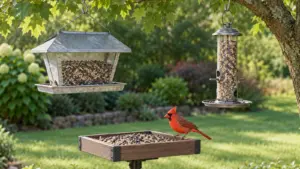
How to Attract Cardinals to Your Feeder
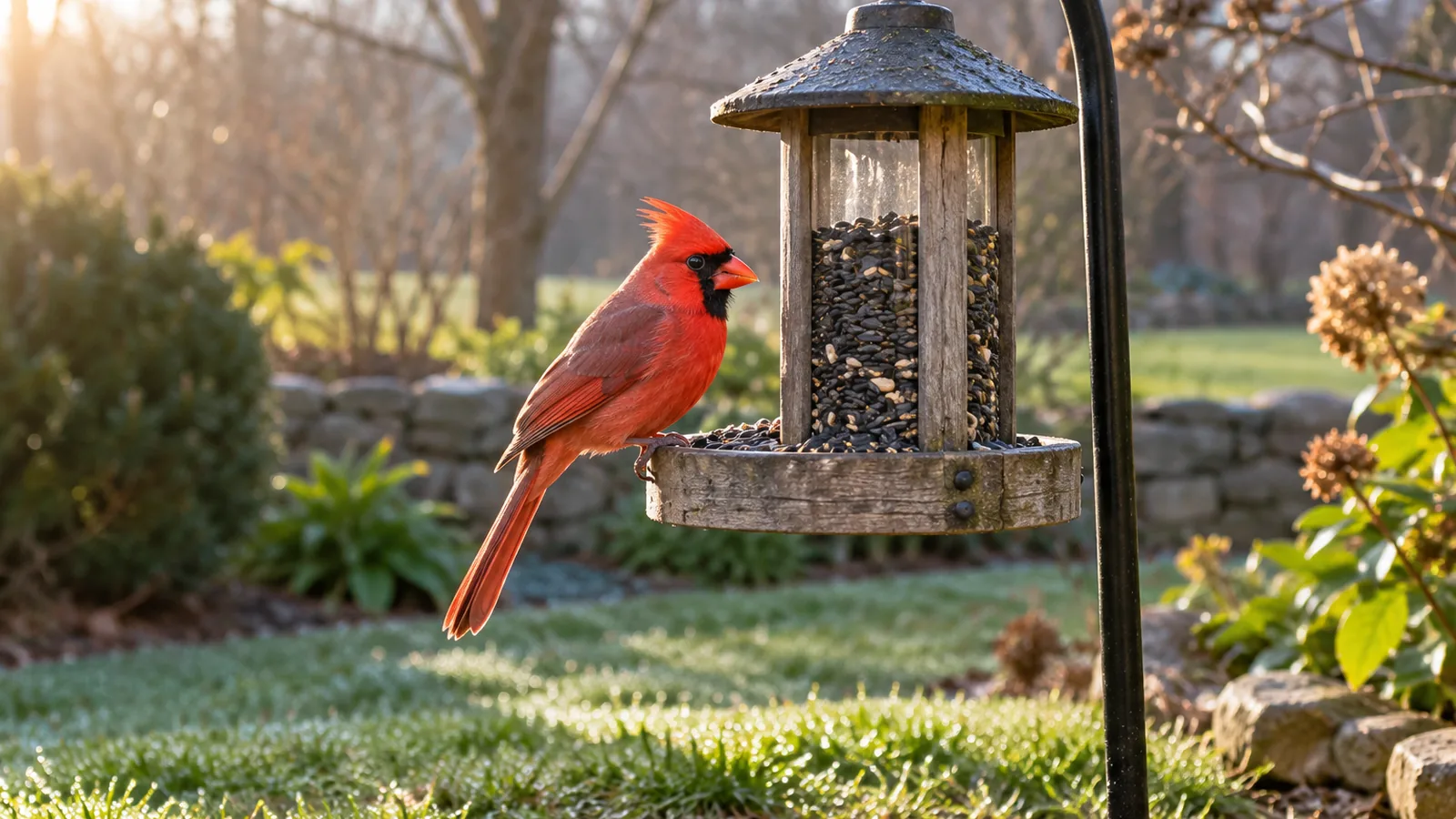
Attracting cardinals starts with black-oil sunflower seed and a spot about 10 ft (3 m) from branches that cats or squirrels could use to reach it. Don’t let the seed get wet or spoiled, because birds may avoid it.
Quick answer
How do I attract cardinals to my feeder?
Fill a tray or hopper feeder with black-oil sunflower seed, and place it near trees or shrubs that give birds cover. Keep the feeder about 10 ft (3 m) from branches that cats or squirrels could use to reach it. If no cardinals show up after a few days, scatter seed on the ground nearby.
- Fill the feeder with black-oil sunflower seed, which cardinals favor and which Cornell describes as high-energy.
- Use a tray or hopper feeder, the styles recommended for offering safflower.
- Add safflower, cracked corn, or peanut hearts as alternatives, since cardinals eat all three.
- Place the feeder near trees or shrubs, about 10 ft (3 m) from branches cats or squirrels could reach.
- Move the feeder to a sheltered spot if the current location is exposed.
- If no cardinals arrive after a few days, scatter seed on the ground near the feeder.
Set Up Your Feeder for Cardinals
| Placement factor | Recommended value | Source |
|---|---|---|
| Pole feeder height (general guidance, not cardinal-specific) | about 5 ft (1.5 m) above ground | audubon.org |
| Distance from trees, shrubs, or tall structures on a pole feeder | at least 10 ft (3 m) | audubon.org |
| Distance from branches or cover that could help cats or squirrels reach the feeder | about 10 ft (3 m) | feederwatch.org |
The 5 ft (1.5 m) height is general pole-feeder guidance, not a cardinal rule, so treat it as a starting point and adjust it to your yard.
- Fill the feeder with black-oil sunflower seed. Cornell describes it as high-energy and thin-shelled, and cardinals favor it.
- Choose a tray or hopper feeder. Cardinals use nearly any feeder type, but tray and hopper feeders are the ones recommended for safflower.
- Add safflower, cracked corn, or peanut hearts as alternatives. Cardinals eat all three, and FeederWatch lists milo as another food they may visit feeders for.
- Place the feeder near trees or shrubs so birds have refuge. Then set the distances from the table above.
- Leave dense shrubby undergrowth along the yard edges, because cardinals favor that habitat.
- If the spot is exposed, move the feeder to a sheltered location, which may help birds find it.
- Refill the feeder as seed runs low. If no cardinals come after a few days, scatter seed on the ground nearby to make the feeding site easier to notice.
Which Foods Do Cardinals Prefer?
Black-oil sunflower seed is a favorite feeder food for Northern Cardinals, so start with it. Cornell describes it as high-energy and thin-shelled, which packs plenty of energy into a seed that’s easy to crack open.
Cardinals also eat several other foods you can offer alongside it:
- Safflower: Northern Cardinals eat it. Tray and hopper feeders are the setups recommended for offering it.
- Cracked corn: Northern Cardinals eat it.
- Peanut hearts: Northern Cardinals eat these as well.
- Milo: FeederWatch lists it among the foods cardinals may visit feeders for.
Note
Milo is the least certain choice on this list, because FeederWatch says cardinals may visit feeders for it.
Cardinals use nearly any feeder type within their range, so the feeder you already own is a fine place to begin. Fill it with black-oil sunflower seed first. Once you want a second food, add safflower in a tray or hopper feeder.
Where Should You Place the Feeder?
Pick a spot where a tree or shrub is close enough to give birds refuge, but where the feeder itself stays clear of overhanging branches. That spacing also makes the feeder harder for cats and squirrels to reach. Stand at the window you’ll watch from and confirm you can see the feeder from there before you fill it.
Check three things when you choose the spot:
- Cover: a tree or shrub nearby gives birds a place to retreat.
- Shelter: a sheltered location may help if the feeder would otherwise sit in the open.
Warning
A branch that a cat or squirrel can jump from is a direct route to your feeder.
If you hang the feeder from a pole, mount it about 5 ft (1.5 m) above ground. Audubon also advises keeping it at least 10 ft (3 m) from shrubs, trees, or other tall structures to deter squirrels.
Why Aren’t Cardinals Visiting Yet?
Start with three checks: the food, the feeder style, and the spot. A feeder with the wrong seed or a hard-to-reach location can sit unused even when cardinals are nearby.
- Food: Black-oil sunflower seed is a favorite for Northern Cardinals. Safflower, cracked corn, and peanut hearts are also on their list, and milo appears among the foods they may visit feeders for.
- Feeder style: Cardinals use nearly any feeder type in their range, but tray and hopper feeders are recommended for safflower.
- Placement: Keep the feeder near trees or shrubs so birds have cover, and stay about 10 ft (3 m) from branches that cats or squirrels could use to reach it. A sheltered spot also helps if the feeder sits in an exposed area.
If you’ve changed nothing and still see no visitors, give the feeder time, but don’t wait indefinitely. If nothing shows up after a few days, scatter seed on the ground near the feeder so the feeding spot is easier to spot.
A quiet feeder doesn’t always mean your setup is wrong. Bird visits can shift with natural food, weather, habitat, and predator activity, and bird numbers vary locally and from year to year. If your feeder was busy before and has gone quiet, look at what has changed around your yard, such as new predators or a shift in natural food, before you move it.
Frequently Asked Questions
How long does it take cardinals to find a new feeder?
There’s no reliable cardinal-specific timeline for finding a new feeder. If none show up after a few days, Cornell Lab suggests scattering seed on the ground nearby so the feeding spot is easier to notice.
How often should I clean my cardinal bird feeder?
Clean your feeder every week or two, and more often during heavy use or wet weather. Let it dry completely before you refill it.
Do cardinals eat fruit, mealworms, or other non-seed foods?
Cardinals eat peanut hearts and cracked corn, which are the alternatives to seed that bird experts list for them. Fruit and mealworms aren’t on that list, so don’t count on them. Offer peanut hearts or cracked corn alongside black-oil sunflower seed for variety.
Does a birdbath help attract cardinals to my yard?
No, nothing here links a birdbath to more cardinal visits, so cover is the factor to focus on. Cardinals favor dense shrubby habitat, so leave shrubs and undergrowth along your yard edges.
Is it safe to keep feeding cardinals during nesting season?
Yes, if you keep the feeder clean and away from cover that cats or squirrels could use to reach it.
Conclusion
If you’re starting from scratch, use any feeder type and fill it with black-oil sunflower seed. If your feeder has already gone quiet, check whether branches sit within reach of cats or squirrels, and scatter some seed on the ground beside it. Then stand at the window you’ll watch from, confirm you can see the feeder, and check it again in a few days.
Sources
- Feeding Birds – Project FeederWatch (feederwatch.org)
- feederwatch.org (feederwatch.org)
- allaboutbirds.org (allaboutbirds.org)
- allaboutbirds.org (allaboutbirds.org)
- allaboutbirds.org (allaboutbirds.org)
- allaboutbirds.org (allaboutbirds.org)
- allaboutbirds.org (allaboutbirds.org)
- feederwatch.org (feederwatch.org)
- audubon.org (audubon.org)
- feederwatch.org (feederwatch.org)