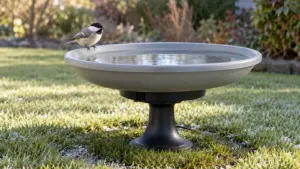
How to Keep a Bird Bath From Freezing in Winter

To keep a bird bath from freezing, use a heated bird bath or an outdoor-rated de-icer, such as the Farm Innovators C-50, which turns on at about 35°F. Plug it into a GFCI outlet, keep the element under water, and never add antifreeze, glycerin, or salt, since these can harm birds.
Quick answer
How do you keep a bird bath from freezing?
Use a plastic bath or a bath with a built-in heater, set it in a sunny spot, and plug any electric heater into a GFCI outlet. Keep the heating element fully under water and never let the water run low. Skip antifreeze, glycerin, and salt, since they can harm birds. Choose a de-icer only for a bath you already own, and confirm its rating covers your bath material.
- Pick a plastic bath or one with a built-in heater, and skip ceramic because it can crack in cold weather.
- Place the bath on stable, level ground in a sunny spot, with open space around it and shelter nearby.
- Plug the heater into a ground-fault-interrupter (GFCI) outlet placed within reach of the bath.
- Fill with plain water to 1 inch (2.5 cm) at the edges and 2 inches (5 cm) in the center.
- Position the heater so its element sits fully submerged, and never run it with the water low.
- Check that the water stays open, the heater runs, and the outlet and GFCI still work.
Set Up a Freeze-Resistant Bird Bath
| Spot in bath | Recommended depth (inches) | Source |
|---|---|---|
| Edges | 1 inch (2.5 cm) | allaboutbirds.org |
| Center | 2 inches (5 cm) | allaboutbirds.org |
Depth is the first thing to check when you fill the bath, because a heater must stay under water to run safely. Mark the two depths on the inside of the bath before you fill it, so you can tell at a glance whether the level is right.
- Choose a plastic bath or a bath with a built-in heater, and skip ceramic, because ceramic can crack in cold weather.
- Set the bath on stable, level ground with open space around it, so birds can spot predators, and keep shelter nearby.
- Pick a sunny spot, since sun helps keep the water visible to birds.
- If you use an electric heater, place the bath within reach of an outlet and plug the heater into a ground-fault-interrupter (GFCI) circuit.
- Fill the bath with plain water, not glycerin, because glycerin can mat feathers and raise hypothermia risk for birds.
- Position the heater so its element sits fully submerged, and never run it with the water low.
- Check that the water stays open and the heater is running, and confirm the outlet and GFCI still work.
Which Heating Method Should You Use?
Choose a heated bird bath if you’re buying a bath anyway, and a de-icer if you want to keep a bath you already own. A heated bath has a built-in heating element, while a de-icer is a separate unit you place in an existing bath. Both types commonly use a thermostat, which keeps the water open rather than warm.
A plastic bath with a built-in heater can provide open water in winter. A de-icer has to match your bath, though. The API 300 de-icer is listed for pottery, plastic, or concrete baths up to 15 gallons.
Warning
Some de-icers are not suitable for plastic baths, so confirm the rating for your bath material before you buy one.
On certain Farm Innovators models, set up the de-icer in this order:
- Leave the unit in air below freezing for about 60 minutes so the thermostat resets.
- Plug the unit in after that rest period.
- Check whether the heating element warms the water.
Even a correctly installed de-icer can fail to thaw a bath. Watch for these conditions, since each one can keep the unit from working well:
- Low temperatures
- Wind
- Large water volume
- Incorrect wattage
- Long extension cords that reduce voltage
For most backyards, the bath you already have decides the question. Start with a de-icer if you’re keeping an existing bath, because it avoids buying a new one. Go with a heated bath when you’re replacing your bath anyway, because the heating element comes built in.
How Do You Keep Water Available Safely?
Plug your bird-bath heater into a ground-fault-interrupter (GFCI) outlet, keep the heating element fully under water while it runs, and check the setup before each cold spell. A GFCI is an outlet designed to cut power when it detects a fault, which matters when cords sit near water.
Power is the other half of the safety check. K&H says not to use an extension cord with its heater, but Farm Innovators’ instructions allow a 14–16 gauge outdoor extension cord plugged into a fully grounded 120-volt outlet. If your model’s manual permits an extension cord, keep it as short as possible.
Warning
Farm Innovators says not to operate its de-icer without water, so never let the bath run dry.
Check these items regularly:
- Outlet: Confirm the outlet has power and the GFCI hasn’t tripped.
- Water level: Top up the bath, because winter water can evaporate quickly in dry air.
- Water changes: Dump the water every day or two, scrub the bath, and refill with fresh water.
Skip additives, too. Cornell Lab advises against adding glycerin to bird-bath water because it can mat feathers and raise hypothermia risk. Plain fresh water is the safest choice for birds, and the same rule applies to antifreeze and other chemicals.
What If the Bird Bath Still Freezes?
Start with two checks: confirm the heater has power, and confirm its element is still under water. If the bath still freezes, work through these likely causes:
- No power: Make sure the heater is plugged into a working outlet, and check whether the circuit or GFCI has tripped.
- Element out of water: Top up the bath so the element stays covered, since the heater must remain submerged while it runs.
- Weak power: Cold, wind, a large volume of water, or incorrect wattage can keep a de-icer from thawing the bath, and a long extension cord reduces the voltage it gets. Plug the unit directly into an outlet, and use a model with the right wattage for your bath.
- Unreset thermostat: On certain de-icer models, leave the unit in below-freezing air for about 60 minutes before plugging it in, so the thermostat resets and the element can warm.
Placement can also matter. Severe cold can still overwhelm a working heater on the coldest nights, so check the bath after each cold snap.
If the water has frozen, break up the ice and refill with fresh water.
Warning
Ceramic baths can crack in cold weather, so a plastic bath with a built-in heater is the safer winter choice.
Frequently Asked Questions
Can you put salt in a bird bath to keep it from freezing?
No. The U.S. Fish and Wildlife Service warns that salt can poison birds, so don’t add it to the water. A heated bath or a de-icer keeps the water open without salt. Check the water level often, since it can drop quickly in cold, dry air.
Is antifreeze safe to use in a bird bath?
No. Antifreeze is toxic to birds, so never add it to a bird bath. Glycerin is a poor substitute because it can mat feathers and raise hypothermia risk. Plain fresh water in a heated bath or with a de-icer is the safe choice.
How much electricity does a bird bath heater use?
The B-9 de-icer is rated at 44 watts, and the C-50 is rated at 150 watts. Wattage varies by model, and the wrong wattage can keep a de-icer from thawing the bath. To estimate your cost, multiply the wattage by the hours it runs each day and by your electricity rate.
What temperature should a bird bath heater turn on at?
Aim for a switch-on point near freezing, around 35°F, which the C-50 uses. Some units trigger at a higher temperature, such as the 300 de-icer, which turns on at 46°F. Check your model’s rating before you buy, so the heater runs when your bath needs it.
Are bird bath heaters safe around pets and dogs?
Set it up as this article describes, but published guidance does not address pet safety. Plug the heater into a GFCI outlet, keep the element fully submerged, and inspect the cord and plug before each use. Unplug the unit before you remove it from the bath, and never use a damaged cord or unit.
Conclusion
If you’re buying a bath anyway, pick a plastic bath with a built-in heater. If you already own a bath, buy a de-icer, but only after you confirm its rating covers your bath material. Either way, plug the unit into a GFCI outlet, then walk out to the bath today and check that the heating element sits under water. Put the outlet on your regular check list so a tripped GFCI doesn’t leave your birds with ice.
Sources
- farminnovators.com (farminnovators.com)
- farminnovators.com (farminnovators.com)
- allaboutbirds.org (allaboutbirds.org)
- fws.gov (fws.gov)
- Winterize Your Yard for Birds (audubon.org, 2022-01-25T08:39:45+00:00)
- audubon.org (audubon.org)
- farminnovators.com (farminnovators.com)
- khpet.com (khpet.com)
- miller-mfg.com (miller-mfg.com)
- audubon.org (audubon.org)
- farminnovators.com (farminnovators.com)
- audubon.org (audubon.org)
- miller-mfg.com (miller-mfg.com)